Usa el código "10dcto3" para un 10% dcto extra  Ver más

Enviar a
Costa Rica
0
  • argentina
  • chile
  • colombia
  • españa
  • méxico
  • perú
  • estados unidos
  • internacional

Selecciona tu país

América

Europa

Resto del mundo

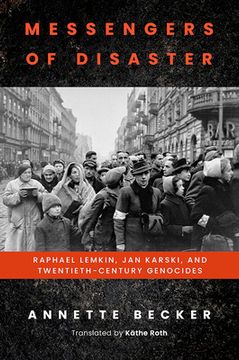
portada Messengers of Disaster: Raphael Lemkin, Jan Karski, and Twentieth-Century Genocides (en Inglés)
Formato
Libro Físico
Traducido por
Idioma
Inglés
N° páginas
304
Encuadernación
Tapa Dura
Dimensiones
23.1x15.5x1.8 cm
Peso
0.50 kg.
ISBN13
9780299333201

Messengers of Disaster: Raphael Lemkin, Jan Karski, and Twentieth-Century Genocides (en Inglés)

Annette Becker (Autor) · Käthe Roth (Traducido por) · University of Wisconsin Press · Tapa Dura

Messengers of Disaster: Raphael Lemkin, Jan Karski, and Twentieth-Century Genocides (en Inglés) - Becker, Annette ; Roth, Käthe

Libro Nuevo Importado
Envío: 22 a 27 días háb.
₡ 29.950
Costos de importación y 13% IVA incluídos en el precio ✅
Libro Nuevo

Quedan más de 100 unidades

₡ 29.950
Llega entre el 16 Nov y el 25 Nov a Costa Rica. Seleccionar ubicación

Reseña del libro "Messengers of Disaster: Raphael Lemkin, Jan Karski, and Twentieth-Century Genocides (en Inglés)"

Leading up to World War II, two Polish men witnessed the targeted extermination of Jews under Adolf Hitler and the German Reich before the reality of the Holocaust was widely known. Raphael Lemkin, a Jewish lawyer who coined the term "genocide," and Jan Karski, a Catholic member of the Polish resistance, independently shared this knowledge with Winston Churchill and Franklin D. Roosevelt. Having heard false rumors of wartime atrocities before, the leaders met the messengers with disbelief and inaction, leading to the eventual murder of more than six million people. Messengers of Disaster draws upon little-known texts from an array of archives, including the International Committee of the Red Cross in Geneva and the International Tracing Service in Bad Arolsen. Carrying the knowledge of disaster took a toll on Lemkin and Karski, but their work prepared the way for the United Nations to unanimously adopt the first human rights convention in 1948 and influenced the language we use to talk about genocide today. Annette Becker's detailed study of these two important figures illuminates how distortions of fact can lead people to deny knowledge of what is happening in front of their own eyes.

Opiniones del libro

Preguntas frecuentes sobre el libro

Todos los libros de nuestro catálogo son Originales.
El libro está escrito en Inglés.
La encuadernación de esta edición es Tapa Dura.

Preguntas y respuestas sobre el libro

¿Tienes una pregunta sobre el libro? Inicia sesión para poder agregar tu propia pregunta.

Opiniones sobre Buscalibre

Ver más opiniones de clientes