Envío a todo Costa Rica por solo ₡1490 

Enviar a
Costa Rica
0
  • argentina
  • chile
  • colombia
  • españa
  • méxico
  • perú
  • estados unidos
  • internacional

Selecciona tu país

América

Europa

Resto del mundo

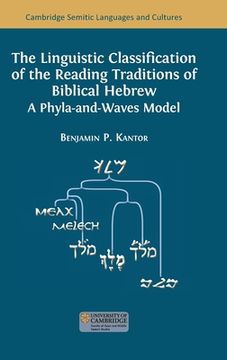
portada The Linguistic Classification of the Reading Traditions of Biblical Hebrew: A Phyla-and-Waves Model (en Inglés)
Formato
Libro Físico
Idioma
Inglés
N° páginas
230
Encuadernación
Tapa Dura
Dimensiones
23.4x15.6x1.9 cm
Peso
0.61 kg.
ISBN13
9781783749546

The Linguistic Classification of the Reading Traditions of Biblical Hebrew: A Phyla-and-Waves Model (en Inglés)

Benjamin Kantor (Autor) · Open Book Publishers · Tapa Dura

The Linguistic Classification of the Reading Traditions of Biblical Hebrew: A Phyla-and-Waves Model (en Inglés) - Kantor, Benjamin

Libro Nuevo Importado
Envío: 10 a 12 días háb.
₡ 32.768
Costos de importación y 13% IVA incluídos en el precio ✅
Libro Nuevo

Quedan más de 100 unidades

₡ 32.768
Llega entre el 10 Nov y el 17 Nov a Costa Rica. Seleccionar ubicación

Reseña del libro "The Linguistic Classification of the Reading Traditions of Biblical Hebrew: A Phyla-and-Waves Model (en Inglés)"

In recent decades, the field of Biblical Hebrew philology and linguistics has been witness to a growing interest in the diverse traditions of Biblical Hebrew. Indeed, while there is a tendency for many students and scholars to conceive of Biblical Hebrew as equivalent with the Tiberian pointing of the Leningrad Codex as it appears in Biblia Hebraica Stuttgartensia (BHS), there are many other important reading traditions attested throughout history. Origen's Secunda reflects a late Roman reading tradition of Biblical Hebrew transcribed into Greek letters. Occasional transcriptions of Biblical Hebrew into Latin letters in Jerome's commentaries similarly reflect a reading tradition from early Byzantine Palestine. In the medieval period, alongside Tiberian Hebrew we also find the Babylonian tradition and the Palestinian tradition. The modern oral reading tradition of the Samaritan community also likely has roots in the Second Temple period. Aside from these primary attestations of the reading traditions, there are a whole host of other modern reading traditions of Biblical Hebrew, from Ashkenazi, to Sephardi, and Yemenite. Despite the rich diversity of traditions of Biblical Hebrew at our fingertips, the linguistic relationship between them has never been mapped out. In this book, then, the phyla-and-waves methodology, which has been used for Semitic language classification, is used to map out the relationship between the main reading traditions of Biblical Hebrew throughout history.

Opiniones del libro

Preguntas frecuentes sobre el libro

Todos los libros de nuestro catálogo son Originales.
El libro está escrito en Inglés.
La encuadernación de esta edición es Tapa Dura.

Preguntas y respuestas sobre el libro

¿Tienes una pregunta sobre el libro? Inicia sesión para poder agregar tu propia pregunta.

Opiniones sobre Buscalibre

Ver más opiniones de clientes